Monthly Archives: February 2009

A Predator That Flies Unfettered

ANALOGY
(Seeing humanity through the eyes of a Hawk)

Don’t be troubled, vox populi has little
Effect on my cognitive state. Especially
Those bitter words and opinions disgorged
By nosy parkers, tattletales, and rumormongers,
Meant to malign, belittle, slander, and just plain
irritate the recipient.
I have learned from experience to pursue only
What sustains life. And in so doing I can reciprocate
In like fashion to complete a cycle written into the
Fabric of who I am

In this place, life
Beckons on open wings …

Having wandered exotic lands
In search of something inexpressible –
Seeking those gems projected upon
The shifting sands of moldering languor –
Caught betwixt fulfillment and rejection
As curiosity follows the innovatory path –
Where shades of indifference and numbness
Barricade the mind seeking wisdom while it
Penetrates the puzzle of human eccentricity –

Life beckons me to spread my wings …

I will admit
That your way
Is not a highway
To be traveled –
That your way
Is not an example
To be followed –
That your way
Does not echo life
And hope —
As a matter of fact,
Your way leaves
One clawing up cliffs
In desperation seeking
Abandoned eggs in
Small crevices.
Your way quenches
All hope for one
To cling to, and
Your way lessens
Expectation while
Tumefying the ego

It is a test of endurance getting here;
One that challenges the mind and body.
Along jagged granite ramparts which have
Seen unremitting centuries pass before,
I hunt for sustenance that sustains life.
Up here the winds blow freely, and
As the heart opens to potential, within
Those moments when hunger and survival
Join hands in harmony,

I swiftly become
A predator that flies unfettered

Richard Lloyd Cederberg

The Winner Stands Alone : Chapter VI by Paulo Coelho

‘I promised I wouldn’t if you behaved in a more adult fashion and with due respect for my intelligence.’

He’s right. The adult thing to do would be to talk a little about herself. She might arouse the compassion that is always there in the mind of a madman by explaining that she’s in a similar situation, even though it isn’t true.

A boy runs past, an iPod in his ears. He doesn’t even turn to look at them.

‘I live with a man who makes my life hell, and yet I can’t leave him.’

The look in Igor’s eyes changes.

Olivia thinks she’s found a way of escaping from the trap. ‘Be intelligent. Don’t just give up; think of the woman who’s married to the man sitting next to you. Be honest.’

‘He’s cut me off from my friends. He’s always jealous even though he can get all the women he wants. He criticises everything I do and says I have no ambition. He even takes the little money I earn as commission.’

The man says nothing but stares at the sea. The pavement is filling up with people; what would happen if she just got to her feet and ran? Would he shoot her? Is it a real gun?

She senses that she has touched on a topic of possible interest to him. It would be best not to do anything foolish, she thinks, remembering the way he spoke and looked at her minutes before.

‘And yet, you see, I can’t bring myself to leave him. Even if I were to meet the kindest, richest, most generous man in the world, I wouldn’t give my boyfriend up for anything. I’m not a masochist, I take no pleasure in these constant humiliations, I just happen to love him.’

She feels the barrel of the gun pressing into her ribs again. She has said the wrong thing.

‘I’m not like that scoundrel of a boyfriend of yours,’ he says, his voice full of loathing now. ‘I worked hard to build up what I have. I worked long and hard, and survived many a setback. I was always honest in my dealings, although there were, of course, times when I had to be hard and implacable. I was always a good Christian. I have influential friends, and I’ve always been grateful to them. In short, I did everything right.

‘I never harmed anyone who got in my way. Whenever possible, I encouraged my wife to do what she wanted to do, and the result: here I am, alone. Yes, I killed people during the idiotic war I was sent to fight, but I never lost my sense of reality. I’m not one of those traumatised war veterans who goes into a restaurant and machine-guns people. I’m not a terrorist. Of course, I could say that life has treated me unfairly and taken from me the most important thing there is: love. But there are other women, and the pain of love always passes. I need to act, I’m tired of being a frog slowly boiling to death.’

‘If you know there are other women and you know that the pain of love will pass, why are you so upset?’

Yes, she’s behaving like an adult now, surprised at the calm way in which she’s trying to deal with the madman by her side.

He seems to waver.

‘I don’t really know. Perhaps because I’ve been abandoned once too often. Perhaps because I need to prove to myself just what I’m capable of. Perhaps because I lied, and there is only one woman for me. I have a plan.’

‘What plan?’

‘I told you before. I’m going to keep destroying worlds until she realises how important she is to me and that I’m prepared to run any risk in order to get her back.’

The police!

They both notice the police car approaching.

‘I’m sorry,’ says the man. ‘I intended to talk a little more. Life hasn’t treated you very fairly either.’

Olivia realises this is the end. And since she now has nothing to lose, she again tries to get up. Then she feels the hand of that stranger on her right shoulder, as if he were fondly embracing her.

Samozashchita Bez Orujiya, or Sambo, as it is better known among Russians, is the art of killing swiftly with one’s bare hands, without the victim realising what is happening. It was developed over the centuries, when peoples or tribes had to confront invaders unarmed. It was widely used by the Soviet state apparatus to eliminate people without leaving any trace. They tried to introduce it as a martial art in the 1980 Moscow Olympics, but it was rejected as being too dangerous, despite all the efforts of the Communists of the day to include in the Games a sport which they alone practised.

Perfect. That way, only a few people know the moves.

Igor’s right thumb is pressing down on Olivia’s jugular vein, and the blood stops flowing to her brain. Meanwhile, his other hand is pressing on a particular point near her armpit, causing the muscles to seize up. There are no contractions, it’s merely a question of waiting two minutes.

Olivia appears to have gone to sleep in his arms. The police car drives by behind them, using the lane that is closed to other traffic. They don’t even notice the embracing couple; they have other things to worry about this morning, like doing their best to keep the traffic moving – an impossible task if carried out to the letter. The latest call over the radio tells them that some drunken millionaire has just crashed his car a mile or so away.

Still supporting the girl, Igor bends down and uses his other hand to pick up the cloth spread out in front of the bench and on which all those tasteless objects were to be displayed. He adroitly folds the cloth up to form an improvised pillow.

When he sees that no one else is around, he tenderly lays her inert body on the bench. She looks as if she were asleep; and in her dreams she must be remembering some particularly lovely day or else having nightmares about her violent boyfriend.

Only the elderly couple had noticed them sitting together. And if the crime were discovered — which Igor doubted, since there were no visible marks — they would describe him to the police as fairer or darker or older or younger than he really was; there wasn’t the slightest reason to be worried; people never pay much attention to what’s going on around them.

Before leaving, he plants a kiss on the brow of the sleeping beauty and murmurs:

‘As you see, I kept my promise. I didn’t shoot.’
The 7th Chapter will be posted on Tuesday 17th of February
http://paulocoelhoblog.com/the-winner-stands-alone

Release dates:
February : Arabic Countries
March 19: UK
April: France, USA, Greece, Holland, Russia, Bulgaria.
May: Australia, Iran, South Africa

The Winner Stands Alone : Chapter V by Paulo Coelho

Igor points to the one free lane on the Boulevard de la Croisette.

‘Let’s say that I don’t want you to go to a party, but I daren’t say so openly. If I wait for the rush hour to begin and stop my car in the middle of the road, within ten minutes, the whole of the boulevard opposite the beach will have come to a standstill. Drivers will think: “There must have been an accident” and will wait patiently. In fifteen minutes, the police will arrive with a truck to tow the car away.’

‘That kind of thing is always happening.’

‘Ah, yes, but I — very carefully and without anyone noticing – will have got out of my car and scattered nails and other sharp objects on the road in front of it. And I will have carefully painted all of these objects black, so that they blend in with the asphalt. As the tow-truck approaches, its tyres will be punctured. Now we have two problems, and the tailback of traffic will have reached the suburbs of this small city, the very suburbs where you perhaps live.’

‘You clearly have a very vivid imagination, but you would still only have managed to delay me by about an hour.’

It was Igor’s turn to smile.

‘Oh, I could come up with all kinds of ways of making the situation worse. When people started gathering round to help, for example, I would throw something like a small smoke-bomb under the truck. This would frighten everyone. I would get into my car, feigning despair, and start the engine. At the same time, though, I would empty a bit of lighter fluid on the floor of the car and it would ignite. I would then jump out of the car in time to observe the scene: the car gradually going up in flames, the flames reaching the fuel tank, the explosion that would affect the car behind as well, and so on in a chain reaction. And I could achieve all that with a car, a few nails, a smoke-bomb that you can buy in a shop, and a small amount of lighter fluid…’

Igor takes from his pocket a small flask containing some kind of liquid.

‘…about this much. I should have done that when I realised Ewa was about to leave me, to make her postpone her decision and reflect a little and consider the consequences. When people start to reflect on decisions they’re trying to make, they usually change their mind — it requires a lot of courage to take certain steps.
‘But I was too proud. I thought it was just a temporary move and that she would soon realise her mistake. I’m sure she regrets leaving me and, as I said, wants to come back. But for that to happen I need to destroy a few worlds.’

The expression on his face has changed, and Olivia is no longer amused by the story. She gets up.

‘Well, I need to do some work.’

‘But I paid you to listen to me. I paid enough to cover your whole working day.’
She puts her hand in her pocket to give him back the money, but at that moment, she sees the pistol pointing at her face.

‘Sit down.’

Her first impulse is to run. The elderly couple are still slowly approaching.
‘Don’t run away,’ he says, as if he could read her thoughts. ‘I haven’t the slightest intention of firing the gun if you’ll just sit down again and hear me out. If you don’t try anything and do as I say, then I swear I won’t shoot.’

A series of options pass rapidly through Olivia’s head, the first being to run, zigzagging her way across the street, but she realises that her legs have gone weak.

‘Sit down,’ the man says again. ‘I won’t shoot if you do as you’re told. I promise.’
Yes, it would be madness on his part to fire that gun on a sunny morning, with cars driving past outside, people going to the beach, the traffic getting heavier by the minute, and more pedestrians walking along the pavement. Best to do as the man says, even if only because she’s in no state to do anything else; she’s almost fainting.

She obeys. Now she just has to convince him that she’s not a threat, to listen to his deserted husband’s lament, to promise him that she has seen nothing, and then, as soon as a policeman appears, doing his usual round, throw herself to the ground and scream for help.

‘I know exactly what you’re feeling,’ the man says, trying to calm her. ‘The symptoms of fear have been the same since the dawn of time. They were the same when men had to face wild beasts and they continue to be so right up to the present day: blood drains away from the face and the epidermis, protecting the body and avoiding blood loss, that’s why people turn pale. The intestines relax and release everything, so that there will be no toxic matter left contaminating the organism. The body initially refuses to move, so as not to provoke the beast in question by making any sudden movement.’
‘This is all a dream,’ thinks Olivia. She remembers her parents, who should have been here with her this morning, but who had been up all night making jewellery because the day looked likely to be a busy one. A few hours ago, she had been making love with her boyfriend, whom she believed to be the man of her life, even though he sometimes hit her; they reached orgasm simultaneously, something that hadn’t happened for a long time. After breakfast, she decided not to take her usual shower because she felt free and full of energy and pleased with life.

No, this can’t be happening. She must try to appear calm.

‘Let’s talk. The reason you bought all my stuff was so that we could talk. Besides, I wasn’t getting up in order to run away.’

He presses the barrel of the gun gently against the girl’s ribs. The elderly couple pass by, glance at them and notice nothing odd. There’s that Portuguese girl, they think, trying, as usual, to impress some man with her dark eyebrows and child-like smile. It’s not the first time they’ve seen her with a strange man, and this one, to judge by his clothes, has plenty of money.

Olivia fixes them with her eyes, as if trying to tell them what’s going on just by looking. The man beside her says brightly:

‘Good morning.’

The couple move off without uttering a word. They’re not in the habit of talking to strangers or of exchanging greetings with street vendors.

‘Yes, let’s talk,’ says the Russian, breaking the silence. ‘I’m not really going to try and disrupt the traffic. I was just giving that as an example. My wife will realise I’m here when she starts to receive the messages. I’m not going to take the obvious route, which would be to go and meet her. I need her to come to me.’

This was a possible way out.

‘I can deliver the messages, if you like. Just tell me which hotel she’s staying at.’
The man laughs.

‘You suffer from the youthful vice of thinking you’re cleverer than everyone else. The moment you left here, you’d go straight to the police.’

Her blood freezes. Are they going to sit on this bench all day? Is he going to shoot her after all, now that she knows his face?

‘You said you weren’t going to shoot.’
http://paulocoelhoblog.com/the-winner-stands-alone

Release dates
March: UK, Lebanon and Middle East
April: France, Greece, Holland, Russia, USA

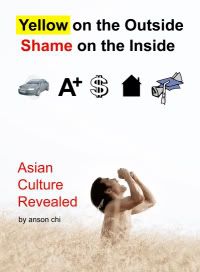
Yellow on the Outside, Shame on the Inside: Asian Culture Revealed

Why do Asians really get straight A’s? Why do Asians really become doctors and lawyers? Why do Asians really play the piano? Many people believe that the reason has to do with the pressure to perform and the pressure to conform, however, it goes much deeper than that–much, much deeper! This didactic novel reveals the truths about Asian culture, which will shock you to the marrow of your bones–and open a hidden world of long-guarded secrets.


Download Absolutely Free @ http://ansonchi.webng.com/

The Winner Stands Alone : Chapter IV by Paulo Coelho

He sees a young woman setting out her wares on the pavement — various bits of craftwork and jewellery of rather dubious taste.

Yes, she will be the sacrifice. She is the message he must send, a message that will be understood as soon as it reaches its destination. Before going over to her, he observes her tenderly; she doesn’t know that in a little while, if all goes well, her soul will be wandering the clouds, free for ever from an idiotic job that will never take her where her dreams would like her to go.

‘How much?’ he asks in perfect French.

‘Which piece do you want, sir?’

‘All of them.’

The young woman — who must be twenty at most — smiles.

‘This isn’t the first time someone has asked to buy everything. The next step is usually: “Would you like to go for a walk? You’re far too pretty to be here selling these things. I’m…”‘

‘No, I’m not. I don’t work in the movies, nor am I going to make you an actress and change your life. I’m not interested in the things you’re selling either. I just need to talk, and we can do that right here.’

The young woman averts her gaze.

‘My parents make these things, and I’m proud of what I do. One day, someone will come along who’ll recognise their value. Please, go away. I’m sure you can find someone else to listen to what you have to say.’

Igor takes a bundle of notes out of his pocket and puts them gently down beside her.
‘Forgive my rudeness. I only said I wasn’t interested in buying anything to see if you would lower the price. Anyway, my name is Igor Malev. I flew in from Moscow yesterday, and I’m still a little jet-lagged.’

‘My name’s Olivia,’ says the young woman, pretending to believe his lie.

Without asking her permission, he sits down on the bench beside her. She shifts up an inch or so.

‘What do you want to talk about?’

‘First, take the money.’

Olivia hesitates, then, looking around, realises that she has no reason to be afraid. Cars are now driving down the one available lane, young people are heading for the beach, and an elderly couple are coming towards them down the pavement. She puts the money in her pocket, not even bothering to count it; she has enough experience of life to know that it’s more than enough.

‘Thank you for accepting my offer,’ says the Russian. ‘You asked me what I want to talk about? Well, nothing very important.’

‘You must be here for a reason. You need a reason to visit Cannes at this time of year when the city is as unbearable for the people who live here as it is for the tourists.’
Igor is looking at the sea. He lights a cigarette.

‘Smoking’s bad for your health,’ she says.

He ignores this remark.

‘What, for you, is the meaning of life?’ he asks.

‘Love.’

Olivia smiles. This really is an excellent way to start the day, talking about deeper things than the price of each piece of handiwork or the clothes people are wearing.
‘And for you?’

‘Yes, love too. But for me it was also important to earn enough money to show my parents that I was capable of succeeding. I did that, and now they’re proud of me. I met the perfect woman, we married, and I would like to have had children, to honour and fear God. The children, alas, never came.’

Olivia doesn’t like to ask why. The man, in his forties continues in his perfect French:
‘We thought of adopting a child. Indeed, we spent two or three years thinking about it, but then life began to get too busy what with business trips and parties, meetings and deals.’

‘When you sat down here to talk, I thought you were just another eccentric millionaire in search of an adventure, but I’m enjoying talking about these things.’

‘Do you think about the future?’

‘Yes, I do, and I think my dreams are much the same as yours. Obviously, I’d like to have children as well…’

She pauses. She doesn’t want to hurt the feelings of this unexpected new companion.
‘…if, of course, I can. Sometimes, God has other plans.’

He appears not to have heard her answer.

‘Do only millionaires come to the Festival?’

‘Millionaires and people who think they’re millionaires or want to become millionaires. While the Festival is on, this part of the city is like a madhouse. Everyone behaves as if they were terribly important, apart from the people who really are important; they’re much politer; they don’t need to prove anything to anyone. They don’t always buy what I have to sell, but at least they smile, make some pleasant remark and treat me with respect. What are you doing here?’

‘God made the world in six days, but what is the world? It’s what you or I see. Whenever someone dies, a part of the universe dies too. Everything a person felt, experienced and saw dies with them, like tears in the rain.’

‘”Like tears in the rain”… I saw a film once that used that phrase. I can’t remember now what it was.’

‘I didn’t come here to cry. I came to send messages to the woman I love, and in order to do that, I need to destroy a few universes or worlds.’

Instead of feeling alarmed by this last statement, Olivia laughs. This handsome, well-dressed man, speaking fluent French, doesn’t seem like a madman at all. She was fed up with always hearing the same things: you’re very pretty, you could be doing better for yourself, how much is this, how much is that, it’s awfully expensive, I’ll go away and think about and come back later (which they never do, of course), etc. At least this Russian has a sense of humour.

‘Why do you need to destroy the world?’

‘So that I can rebuild my own world.’

Olivia would like to try and console him, but she’s afraid of hearing the famous words: ‘I think you could give meaning to my life,’ at which point the conversation would come to an abrupt halt because she has other plans for her future. Besides, it would be absurd on her part to try and teach someone older and more successful how to overcome his difficulties.

One way out would be to learn more about his life. After all, he’s paid her — and paid her well — for her time.

‘How do you intend to do that?’

‘Do you know anything about frogs?’

‘Frogs?’

‘Yes, various biological studies have shown that if a frog is placed in a container along with water from its own pond, it will remain there, utterly still, while the water is slowly heated up. The frog doesn’t react to the gradual increase in temperature, to the changes in its environment, and when the water reaches boiling point, the frog dies, fat and happy.

‘On the other hand, if a frog is thrown into a container full of already boiling water, it will jump straight out again, scalded, but alive!’

Olivia doesn’t quite see what this has to do with the destruction of the world. Igor goes on:

‘I was like that boiled frog. I didn’t notice the changes. I thought everything was fine, that the bad things would just go away, that it was just a matter of time. I was ready to die because I lost the most important thing in my life but, instead of reacting, I sat there bobbing apathetically about in water that was getting hotter by the minute.’
Olivia plucks up the courage to ask:

‘What did you lose?’

‘The truth is I didn’t lose anything. Life sometimes separates people so that they can realise how much they mean to each other. For example, last night, I saw my wife with another man. I know she wants to come back to me, that she still loves me, but she’s not brave enough to take the first step. Some boiled frogs still think it’s obedience that counts, not ability: those who can, lead, and those with any sense, obey. So where’s the truth in all this? It’s better to emerge from a situation slightly scalded, but alive and ready to act. And I think you can help me in that task.’

Olivia tries to imagine what is going through the mind of the man beside her. How could anyone leave such an interesting person, someone who can talk about things she has never even thought about? Then again, there’s no logic to love. Despite her youth, she knows that. Her boyfriend, for example, can be quite brutal and sometimes hits her for no reason, and yet she can’t bear to be apart from him even for a day.

What exactly were they talking about? About frogs and about how she could help him. She can’t help him, of course, so she’d better change the subject.

‘And how do you intend to set about destroying the world?’

http://paulocoelhoblog.com/the-winner-stands-alone/

Release dates
March: UK, Lebanon and Middle East
April: France, Greece, Holland, Russia, USA
May: Australia, Iran, Bulgaria, Poland
This is Your Brain When it is Creative

The results of a fascinating study of jazz musicians are giving scientists a clearer picture of where creativity comes from in your brain.

How, precisely did they do this?  Dr. Charles Limb decided it would be good to compare the brain of a jazz musician when he (or she) was alternately playing by memory and going off on an improvised riff.  The only problem was, how, exactly, to accomplish it.  The usual procedure is to put a person inside a MRI machine and measure changes in oxygen that signify various different parts of the brain being utilized.

However, it is just the wee-est bit difficult to fit a jazz musician and his instrument inside a MRI machine.

So what they did was have a special metal-less keyboard designed and then had jazz pianists play both memorized tunes and riffs while inside the MRI.

The results?  Creativity in the form of jazz improv utilized the same parts of the brain as dreaming.  First of all inhibition switched off and then self expression switched on.  The musicians also showed heightened sensory awareness, with areas associated with touch, hearing and sight lighting up.

How cool is that?  That there are actually places in the brain where our creativity comes from just fascinates me.

Dr. Limb cautions that the brain of an artist or writer might well function differently from a musician and he hopes to test artists and writers next.  Um, Dr. Limb?  I’ll volunteer.  Anything to make the process of sitting down to write a little easier.

Apparently what this research will be most useful for is research into brain damage and diseases such as Parkinson’s (which a very close friend of mine just got diagnosed with).

But the lesson seems clear enough to me: all we have to do to be creative is let go of our inhibitions and let self expression fly.  I’ve been in that flow before.  Its the best thing ever, so much so that most of my life is spent in an effort to return to that state.

The Winner Stands Alone : Chapter III by Paulo Coelho

Fashion. Whatever can people be thinking? Do they think fashion is something that changes according to the season of the year? Did they really come from all corners of the world to show off their dresses, their jewellery and their collection of shoes? They don’t understand. ‘Fashion’ is merely a way of saying: ‘I belong to your world. I’m wearing the same uniform as your army, so don’t shoot.’

Ever since groups of men and women first started living together in caves, fashion has been the only language everyone can understand, even complete strangers. ‘We dress in the same way. I belong to your tribe. Let’s gang up on the weaklings as a way of surviving.’

But some people believe that ‘fashion’ is everything. Every six months, they spend a fortune changing some tiny detail in order to keep up their membership of the very exclusive tribe of the rich. If they were to visit Silicon Valley, where the billionaires of the IT industry wear plastic watches and beat-up jeans, they would understand that the world has changed; everyone now seems to belong to the same social class; no one cares any more about the size of a diamond or the make of a tie or a leather briefcase. In fact, ties and leather briefcases don’t even exist in that part of the world; nearby, however, is Hollywood, a relatively more powerful machine — albeit in decline — which still manages to convince the innocent to believe in haute-couture dresses, emerald necklaces and stretch limos. And since this is what still appears in all the magazines, who would dare destroy a billion-dollar industry involving advertisements, the sale of useless objects, the invention of entirely unnecessary new trends, and the creation of identical face creams all bearing different labels?

How ridiculous! Igor cannot conceal his loathing for those whose decisions affect the lives of millions of honest, hard-working men and women leading dignified lives and glad to have their health, a home and the love of their family.
How perverse! Just when everything seems to be in order and as families gather round the table to have supper, the phantom of the Superclass appears, selling impossible dreams: luxury, beauty, power. And the family falls apart.
The father works overtime to be able to buy his son the latest trainers because if his son doesn’t have a pair, he’ll be ostracised at school. The wife weeps in silence because her friends have designer clothes and she has no money. Their adolescent children, instead of learning the real values of faith and hope, dream only of becoming singers or movie stars. Girls in provincial towns lose any real sense of themselves and start to think of going to the big city, prepared to do anything, absolutely anything, to get a particular piece of jewellery. A world that should be directed towards justice begins instead to focus on material things, which, in six months’ time, will be worthless and have to be replaced, and that is how the whole circus ensures that the despicable creatures gathered together in Cannes remain at the top of the heap.

Igor is untouched by this destructive power, for he has one of the most enviable jobs in the world. He continues to earn more money in a day than he could spend in a year, even if he were to indulge in all possible pleasures, legal and illegal. He has no difficulty in finding women, regardless of whether they know how much money he has — he’s tested it out on more than one occasion and never failed yet. He has just turned 40, is in good physical shape and, according to his annual checkup, has no health problems. He has no debts either. He doesn’t have to wear a particular designer label, go to a particular restaurant, spend his holidays at a beach where ‘everyone’ goes or buy a watch just because some successful sportsman is promoting it. He can sign major contracts with a cheap ballpoint pen, wear comfortable, elegant jackets, hand-made by a tailor who has a small shop next to his office, and which carry no label at all. He can do as he likes and doesn’t have to prove to anyone that he’s rich; he has an interesting job and loves what he does.

Perhaps that’s the problem: he still loves what he does. He’s sure that this is why the woman who came into the bar some hours earlier is not sitting at his table with him.
He tries to keep thinking, to pass the time. He asks Kristelle for another drink — he knows the waitress’s name because an hour ago, when the bar was emptier (people were having supper), he asked for a glass of whisky, and she said that he looked sad and should eat something to cheer himself up. He thanked her for her concern, and was glad that someone should care about his state of mind.

He is perhaps the only one who knows the name of the waitress serving him, the others only want to know the names — and, if possible, the job title — of the people sitting at the tables and in the armchairs.

He tries to keep thinking, but it’s gone three o’clock in the morning, and the beautiful woman and her courteous companion — who, by the way, looks remarkably like him — have not reappeared. Maybe they went straight up to their room where they are now making love, or perhaps they’re still drinking champagne on one of the yachts where the parties only begin when the other parties are all coming to an end. Perhaps they’re lying in bed, reading magazines, ignoring each other.

Not that it matters. Igor is alone and tired and needs to sleep.

7.22 a.m.

He wakes up at 7:22 .am., much earlier than his body would like, but he hasn’t yet adapted to the time difference between Moscow and Paris. If he was at work, he would already have held two or three meetings with his subordinates and be preparing to have lunch with some new client.

He has another task to fulfil here: he must find someone he can sacrifice in the name of love. He needs a victim, so that Ewa will get his message that very morning.

He has a bath, goes downstairs to have a coffee in an almost deserted restaurant, then sets off along the Boulevard de la Croisette on which nearly all the major luxury hotels are located. There is no traffic because one lane is blocked off and only cars with official permission are being allowed through. The other lane is empty because even the people who live in the city are still only just getting ready to go to work.

He feels no resentment. He has passed the really difficult phase, when he couldn’t sleep because he was so filled with pain and hatred. Now he can understand Ewa’s feelings: after all, monogamy is a myth that has been rammed down people’s throats for far too long. He has read a lot on the subject. It isn’t just a matter of excess hormones or vanity, but, as all the research indicates, a genetic configuration found in almost all animals.

Paternity tests given to birds, monkeys and foxes revealed that simply because these species had developed a social relationship very similar to marriage did not necessarily mean that they had been faithful to each other. In 70 per cent of cases, their offspring turn out to have been fathered by males other than their partners. Igor remembered something written by David Barash, Professor of Psychology at University of Washington in Seattle, in which he said that the only species in nature that doesn’t commit adultery and in which there seems to be 100 per cent monogamy is a flatworm, Diplozoon paradoxum. The male and female worms meet as adolescents, and their bodies literally fuse together.

This is why he cannot accuse Ewa of anything; she was merely following her human instincts. However, she had been brought up to believe in those unnatural social conventions and must be feeling guilty, thinking that he doesn’t love her any more and will never forgive her.
He is, in fact, prepared to do anything, even to send messages that will mean he has destroyed someone’s world, just so that she’ll know that not only is he willing to welcome her back, he will gladly bury the past and ask no questions.

The 4th Chapter will be posted on Friday the 6th of February
http://paulocoelhoblog.com/the-winner-stands-alone